
Define fan packing quantities by separating the complete supplied product, the sales package and any outer-carton grouping. Ask the supplier to confirm how many complete units each level contains and which model or variant those units represent. Keep component quantities and accessories separate from complete-fan counts, then reconcile the quotation, packing schedule and order total on the same agreed basis.
Name the complete product before counting packages
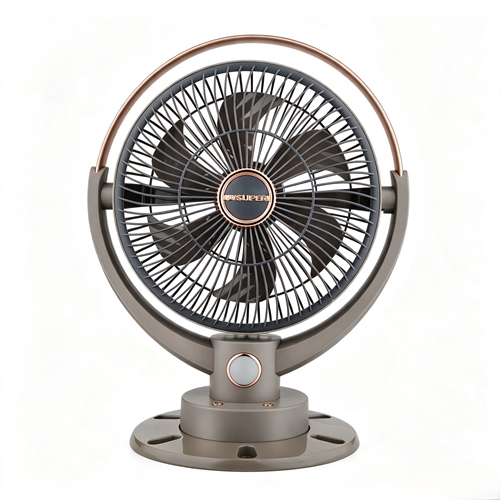
JY SUPER lists JY-2390 and shows a single fan reference with a circular grille and broad-looking base. The picture helps identify the item for an inquiry. It does not establish the complete contents of a sales package or the quantity in an outer carton. Ask the supplier to define the complete supplied product before treating an unqualified unit count as a finished-fan quantity.
State whether the quotation concerns the complete item or a proposed component scope. If the supplier describes separately packed elements, ask how those elements relate to one complete supplied product. Do not count a base, support and head as several fan units unless the commercial request genuinely concerns separate components. A clear product-unit definition should precede the packing calculation.
Build a hierarchy instead of using the word box everywhere
Box may refer to an individual sales package, an intermediate group or an outer carton. Name each level that the supplier actually offers and request the corresponding quantity basis. Leave an intermediate level out when it does not apply. The buyer should not invent an inner-pack arrangement merely because it appears in another supplier’s quotation.
Ask the supplier to distinguish units per sales package from sales packages per outer carton. If a package contains accessories, record their scope without adding them to the complete-fan count. Each level should make clear what is being counted. This prevents an accessory count or component count from being mistaken for the number of finished products in the order.
Use a quantity schedule with explicit units
A packing schedule should make its counting basis visible in every row. The following fields are questions for the supplier, not statements about the offered packing arrangement. Confirm which levels apply to the quoted version and use the same definitions in the purchase order.
Packing level | Quantity field to confirm | Identity field to retain
Complete supplied product | What constitutes a complete fan unit? | Model and confirmed component scope
Sales package | Complete units per sales package | Offered sales-package version
Intermediate grouping, if offered | Sales packages per grouping | Supplier’s grouping reference
Outer carton | Sales packages or complete units per carton, clearly named | Carton packing description
Order total | Total complete supplied units | Model and variant schedule
Separate variant allocation from the carton total
An order total does not explain its allocation across models or colours. Give each requested variant a distinct line or schedule entry and ask the supplier how it will be identified in the packing documentation. A catalogue image showing several appearances does not confirm a mixed assortment, and a single pictured fan does not establish an individually packed offer.
If mixed packing is being considered, describe it as a proposed arrangement and ask whether it is offered. The supplier should explain how the confirmed versions relate to each packing level. Keep an unanswered mixing question pending. Do not substitute a visually similar model or colour to make a carton total appear complete without a specific buyer approval.
Keep packed components distinct from extra complete units
A packing photograph may show a complete item beside separate accessories or a product in a packing configuration. Ask the supplier to label what is shown. A loose-looking element is not automatically an extra product, and a second appearance view is not proof that another fan is supplied. The contents schedule should explain the relationship between the photograph and the quoted sales package.
Request the supplier’s appropriate product and packing instructions when needed. The quantity schedule should not invent an assembly method, wiring arrangement or operational step from a picture. Its job is to describe commercial supply scope and packing counts. Electrical specifications and any required performance evidence belong in separate item-specific documentation.
Reconcile totals before approving the order record
Once the supplier confirms the hierarchy, check that all quantities use compatible units. A calculation based on sales packages should not be compared with a number that counts individual components. Ask for clarification when the quotation and packing schedule use different wording. The reconciliation is only meaningful after the meaning of each quantity field is agreed.
Keep product dimensions, package dimensions and quantity fields separate as well. A carton size is not a unit count, and a catalogue product size does not determine packing quantity. Request those details for the offered packing version rather than estimating from the photograph. Where the supplier revises the arrangement, ask for an updated schedule showing how the order total is represented.
Retain the packing basis for a repeat shipment
Save the approved product-unit definition, packing hierarchy, variant allocation and order total with the quotation version. On a repeat inquiry, ask whether the supplier is offering the same packing arrangement. A reused catalogue image cannot confirm that the number of units in each package remains unchanged. Record a proposed packing change explicitly before accepting it.
• Define a complete supplied unit before calculating carton quantities.
• Name each applicable packing level and the unit counted at that level.
• Record model or colour allocation separately from the shipment total.
• Reconcile the quotation, packing schedule and order on the same definitions.
Frequently asked questions
Does one fan in a product photograph mean one fan per sales package?
No. The image identifies the product reference. Ask the supplier to confirm the offered sales-package contents and its complete-unit count.
Can accessories be included in the complete-fan quantity?
Keep their scope separate. A commercial quantity of complete fans should not silently include tools, components or accessories as additional fan units. Ask the supplier to label every quantity basis.
Does a carton total establish the model assortment?
No. Use a separate model or variant schedule and ask the supplier how the confirmed allocation will be identified in packing documents. Mixed packing should remain a proposal until it is offered and agreed.
What should be checked when packing changes on a repeat order?
Request a revised packing hierarchy, contents description and quantity basis for the quoted version. Reconcile the new schedule with the order’s complete-unit total and retain the approved change with the quotation.
Product and contact references
Catalogue reference: confirm matching item: https://jysuperofficial.com/product/jy-2390/
Related catalogue reference: https://jysuperofficial.com/product/jy-2219/
Contact JY SUPER: https://jysuperofficial.com/contact/
JY SUPER blog: https://jysuperofficial.com/blog/